

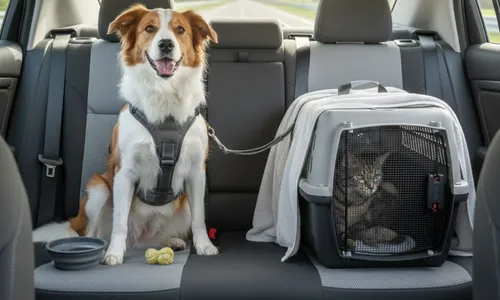
Traveling with pets can be incredibly rewarding, but it also requires thoughtful preparation. Whether planning a short road trip or a long-distance move, your pet's safety and comfort must come first. By understanding the unique needs of dogs and cats during travel, you can create a smooth, stress-free experience for everyone involved.
Preparing for the Journey
Before you travel, make sure your pet:
- Is up to date on vaccines
- Has current flea/tick and heartworm prevention
- Is microchipped with updated contact info
- Recently visited a veterinarian for a travel clearance
Pack essentials such as food, medicines, bowls, bedding, and familiar toys. Pets feel calmer when surrounded by scents and objects they recognize.
Car Safety: Preventing Injuries and Stress
Car travel is one of the most common ways pets journey with their families. However, loose pets in vehicles pose significant risks.
Safety tips include:
- Use a crash-tested carrier or seatbelt harness
- Keep pets in the back seat
- Avoid letting your pet hang out of open windows
- Take breaks every 2–3 hours
- Offer small amounts of water throughout the trip
Never leave a pet in a parked car — even mild temperatures can rise to dangerous levels quickly.
Traveling With Cats
Cats are creatures of habit and often struggle with sudden changes in environment.
To help your cat travel safely:
- Use a sturdy carrier with soft bedding
- Keep the carrier covered to reduce visual stress
- Play calming music
- Avoid feeding immediately before the trip
- Offer reassurance during breaks
Calming pheromone sprays can also help cats feel more secure.
Travel Anxiety: Recognizing Stress
Signs your pet is anxious include:
- Excessive panting
- Vocalizing
- Hiding
- Vomiting or drooling
- Trembling
Training, gradual car exposure, and comfort objects can help pets adjust. In severe cases, talk to your veterinarian about safe anxiety management options.
Air Travel Considerations
Air travel requires special preparation, especially for pets flying in cargo.
Important steps:
- Confirm airline pet policies
- Book your pet's space early
- Use an airline-approved carrier
- Label the carrier with your contact information
- Provide familiar bedding and scent items
For brachycephalic (short-nosed) breeds, air travel may be unsafe — always consult with your veterinarian first.
Travel Accommodations & Safety Stops
When staying overnight, look for pet-friendly hotels that offer safe spaces for exercise and rest. During long drives:
- Take regular breaks
- Avoid feeding heavy meals
- Provide leashed walks
- Offer water frequently
If traveling in hot weather, limit time outside asphalted areas, which can burn paws.
Conclusion: Travel Should Be Enjoyable, Not Stressful
Traveling with pets requires patience, preparation, and understanding. With the right safety practices and environmental adjustments, your dog or cat can enjoy adventures with comfort and confidence.
If you're planning a trip soon, consult your veterinarian for personalized travel guidance to keep your pet safe and happy.